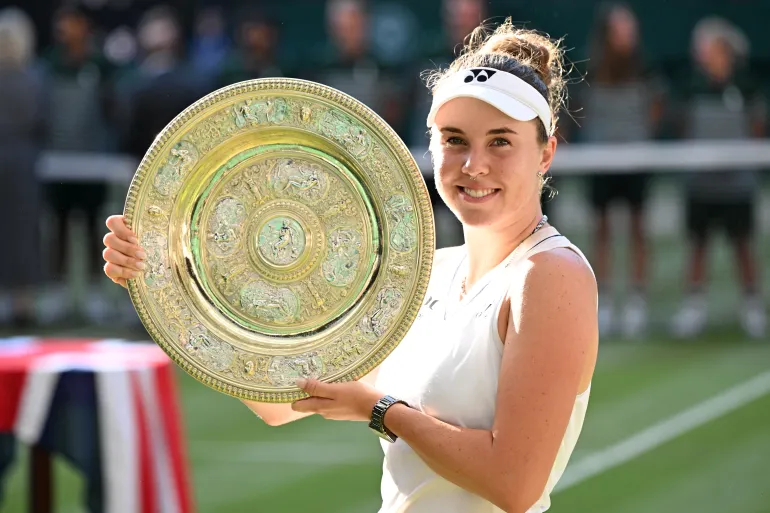

Wimbledon 2026 produced two outstanding champions as Jannik Sinner successfully defended the men’s singles title and Linda Noskova completed a remarkable breakthrough by lifting the women’s trophy.
Sinner defeated Alexander Zverev in the men’s final to claim his second consecutive Wimbledon crown and further strengthen his position at the top of the sport. The Italian entered Centre Court carrying the pressure of being defending champion, but once again demonstrated why he has become one of the most reliable performers in major finals.
Zverev presented a serious challenge, using his powerful serve and aggressive baseline game to keep the match competitive. However, Sinner’s movement, returning and ability to raise his level during the decisive moments ultimately separated the two players.
The victory also marked Sinner’s 100th Grand Slam match win, adding another major milestone to an already exceptional career. His success at Wimbledon confirms that he is no longer simply a hard-court specialist. He has developed into a complete player capable of dominating on every surface.

The women’s final delivered a very different but equally compelling story.
Noskova defeated fellow Czech Karolina Muchova 6-2, 5-7, 6-3 in a tense all-Czech final to secure her first Grand Slam title. The 21-year-old began brilliantly, controlling the opening set with clean ball-striking and confident serving.
Muchova responded in the second set, showing the variety and fighting spirit that had taken her through the tournament. She saved several difficult moments before forcing a deciding set and placing Noskova under enormous pressure.
Noskova refused to be overwhelmed. After missing earlier opportunities to close the match, she remained composed and eventually converted her sixth championship point. The emotional celebrations that followed reflected both the scale of the achievement and the pressure she had overcome.
Her title continued the proud tradition of Czech success in women’s tennis and made her the youngest Wimbledon women’s champion since Petra Kvitova in 2011.
For Sinner, the victory represented confirmation of his established dominance. For Noskova, it marked the arrival of a new major champion with the potential to remain near the top of women’s tennis for years.
Wimbledon once again delivered a perfect mixture of established excellence and emerging talent. Sinner left Centre Court as champion for the second straight year, while Noskova departed having transformed her career forever.
Both champions earned their place in Wimbledon history through composure, resilience and their ability to deliver when the pressure was greatest.

