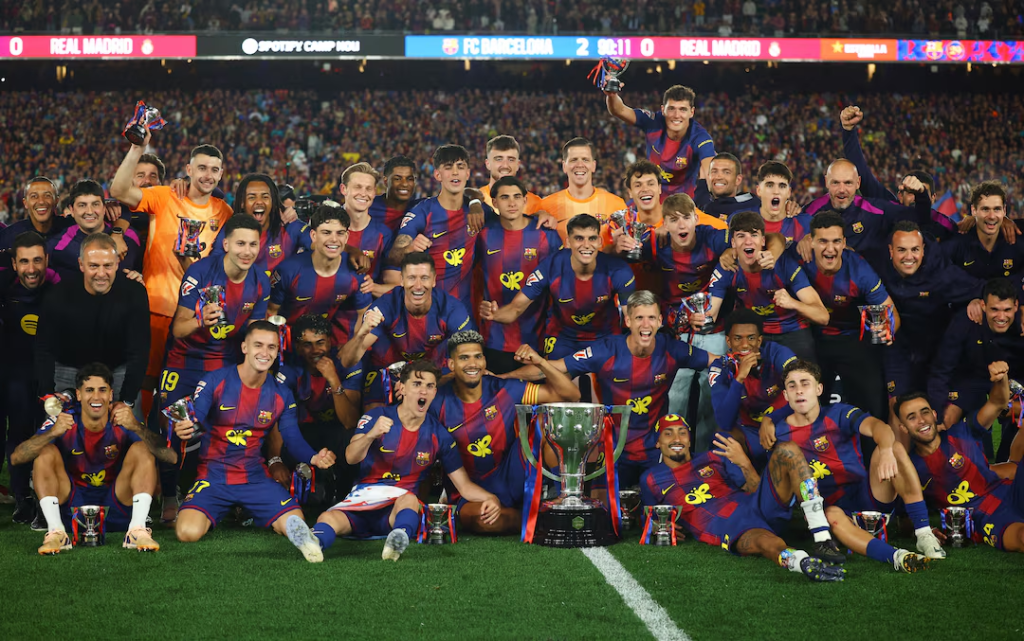

In a script that could only be written in the fevered imagination of Catalan football romantics, FC Barcelona sealed their 29th La Liga title—and their second consecutive championship—on the night of May 10, 2026, with a commanding 2-0 victory over arch-rivals Real Madrid at Spotify Camp Nou. The win not only mathematically ended the title race with three matches to spare but etched another glorious chapter in one of world football’s greatest rivalries.
Barcelona finished the season with an astonishing record: 30 wins, 1 draw, and 4 losses in 35 matches played at the time of clinching, boasting 91 goals scored and just 31 conceded for a +60 goal difference and 91 points. Real Madrid, in second place, trailed by 14 points. It was a season of relentless excellence under head coach Hansi Flick.
The Clinching Night: El Clásico for the Ages
The atmosphere at Camp Nou was electric long before kickoff. A moment of silence was observed for Hansi Flick’s late father, adding a layer of profound emotion to an already historic evening. The German tactician, who had transformed the team’s identity since taking over, stood stoically as the crowd paid respects before erupting into chants of “Barça, Barça!”
The game itself exploded early. In the 9th minute, Marcus Rashford—whose arrival and integration had been one of the summer’s masterstrokes—curled home a stunning free-kick, sending the stadium into delirium. Ferran Torres doubled the lead just nine minutes later, capitalizing on a swift counter and clinical finishing that exemplified Barcelona’s season-long attacking fluidity.
Real Madrid, plagued by injuries and a trophyless campaign that marked their second consecutive barren season, could not mount a serious comeback. Barcelona’s defense, marshaled by the ever-reliable Ronald Araújo and a revitalized midfield, stood firm. The final whistle triggered scenes of pure ecstasy: players piling on top of one another, fireworks lighting up the Barcelona sky, and Lamine Yamal—already a veteran of multiple titles at a tender age—leading the celebrations.
“This is for the fans, for the club, and for everyone who believed in us,” Flick said post-match, his voice cracking with emotion. “The players showed incredible character all season.”
Season Review: How Barcelona Built an Unstoppable Machine
The 2025-26 campaign began with high expectations after the previous year’s title. Flick’s philosophy—high pressing, positional fluidity, and relentless intensity—had taken root. Key additions like Rashford provided depth and proven Premier League pedigree, while academy talents continued to blossom.
Key Strengths:
- Attacking Prowess: 91 goals highlighted a front line blending youth and experience. Lamine Yamal’s creativity, combined with the finishing of players like Robert Lewandowski (before any potential departures or rotations), Raphinha, and Ferran Torres, created constant threats.
- Defensive Solidity: Conceding just 31 goals across nearly a full season reflected improvements in structure. The backline rarely looked vulnerable, even against top opposition.
- Midfield Control: Players like Pedri, Gavi (when fit), and new integrations dictated tempo, winning duels and transitioning quickly.
- Home Dominance: Barcelona remained unbeaten at home in La Liga, turning Camp Nou into a fortress.
Challenges Overcome: Injuries tested squad depth, particularly in defense and midfield at various points. A few away losses kept things interesting early on, but the team’s response—stringing together long winning runs—proved decisive. The Clásico victories, including this title-clincher, served as psychological hammer blows to their main rivals.
Comparisons to legendary Barcelona sides under Pep Guardiola inevitably arose. While this team lacked the same tiki-taka purity, it matched or exceeded them in intensity and efficiency. Flick’s “heavy metal” pressing blended with technical brilliance created a hybrid style perfectly suited to modern demands.

Standout Performers
- Lamine Yamal: The teenage sensation added another trophy to his collection, delivering moments of magic that evoked memories of a young Lionel Messi.
- Marcus Rashford: His goals, work rate, and leadership by example justified his transfer.
- Ronald Araújo & the Defense: A rock at the back.
- Hansi Flick: Tactician of the year contender. His man-management, especially through emotional highs and lows, was exemplary.
- Ferran Torres: Revitalized and clinical when called upon.
Youngsters like Fermín López and others also made significant contributions, ensuring the club’s famed La Masia pipeline remains a strength.
Rivals’ Perspective and League Context
Real Madrid’s season was one of transition and frustration. Despite strong individual performances, injuries and inconsistency prevented a serious title challenge. Villarreal and Atlético Madrid rounded out the top four, but neither could match Barcelona’s consistency.
La Liga as a whole benefited from competitive mid-table battles and technical quality, but Barcelona’s supremacy was rarely in doubt after the winter break.
Historical Significance
This victory marks Barcelona’s second successive title under Flick and their 29th overall, narrowing the gap to Real Madrid’s record. It echoes the club’s golden eras while signaling a bright future with a mix of veterans and emerging stars.
For the fans, it’s more than silverware—it’s validation after years of financial turbulence and on-pitch rebuilding. The streets of Barcelona filled with parades and parties well into the night, a city united in blaugrana pride.
Looking Ahead
With the title secured, focus shifts to the Copa del Rey (if still in contention) and, crucially, the UEFA Champions League. Can this Barcelona side conquer Europe? The foundations are there: depth, hunger, and a winning mentality.
As the season winds down, one thing is certain: FC Barcelona are La Liga champions once more. Visca Barça!
 My Goat Sports